Night Writing
SEPTEMBER is thrilled to present "Night Writing", a solo exhibition with Daniele Frazier opening Saturday, April 4, 2026 on the 2nd Floor. Frazier will be debuting three new bodies of photographic and time-based works. The exhibition marks the inauguration of SEPTEMBER SOMETIMES, our new annex program of solo presentations by artists who are living and working in proximity to the gallery.
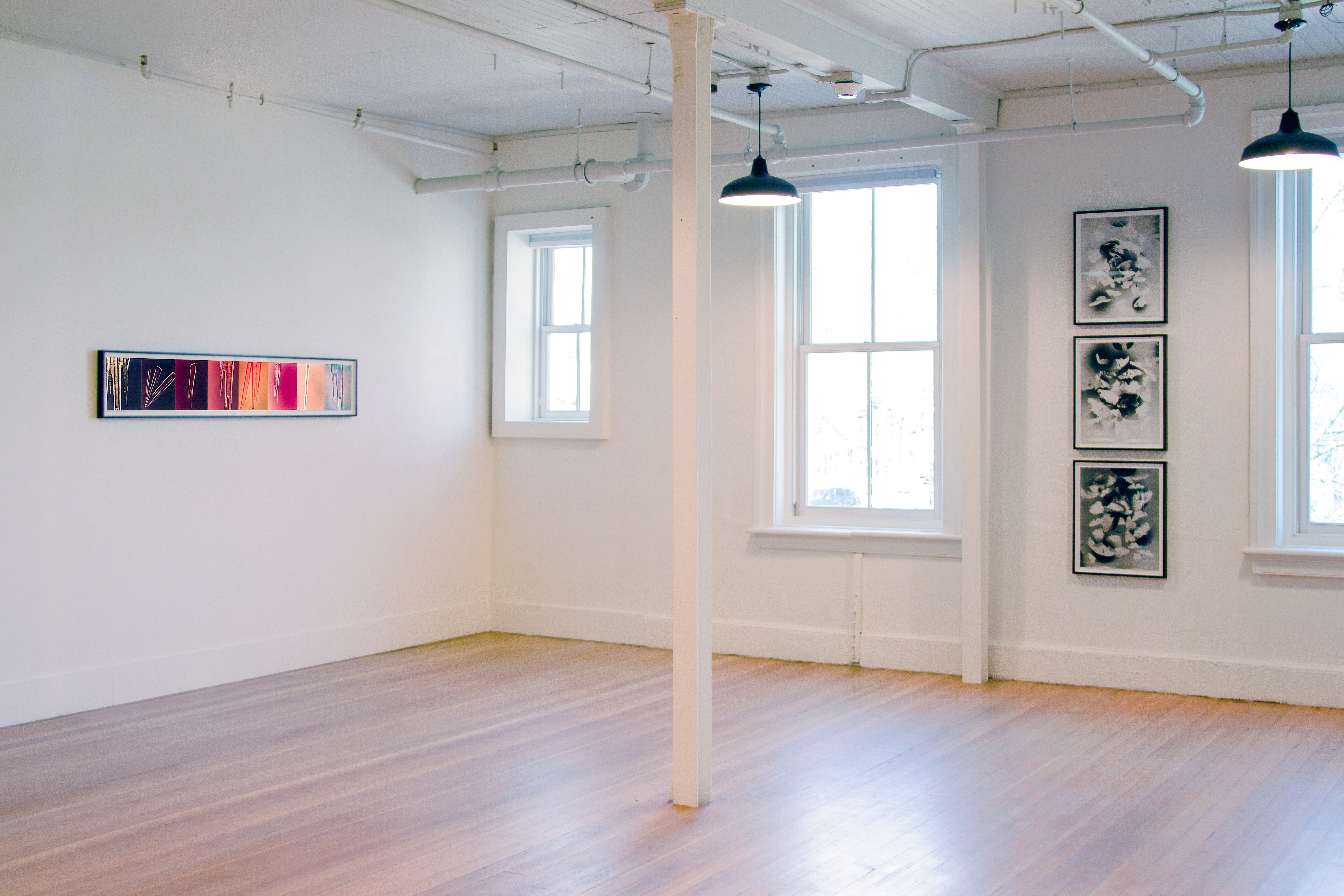
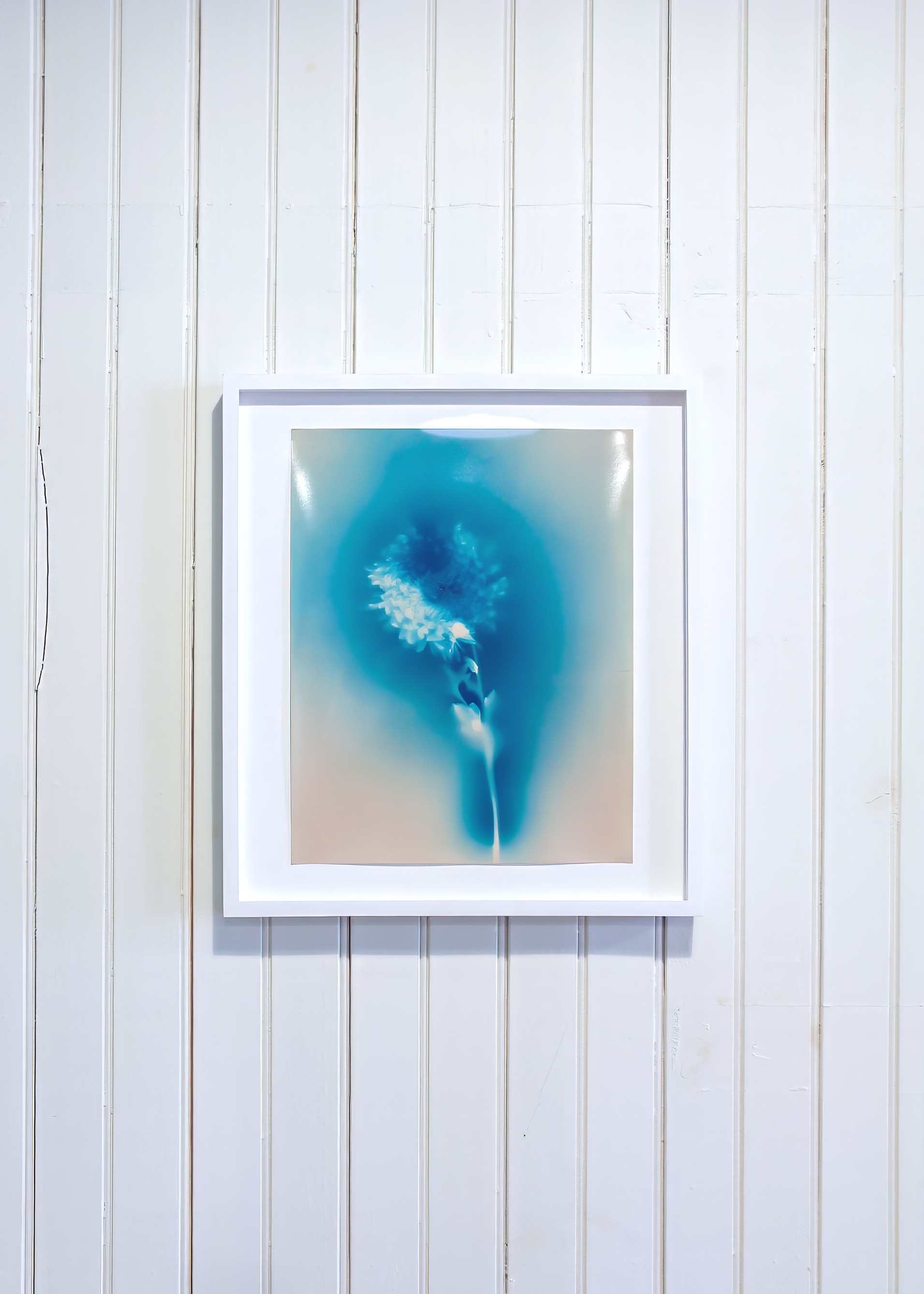
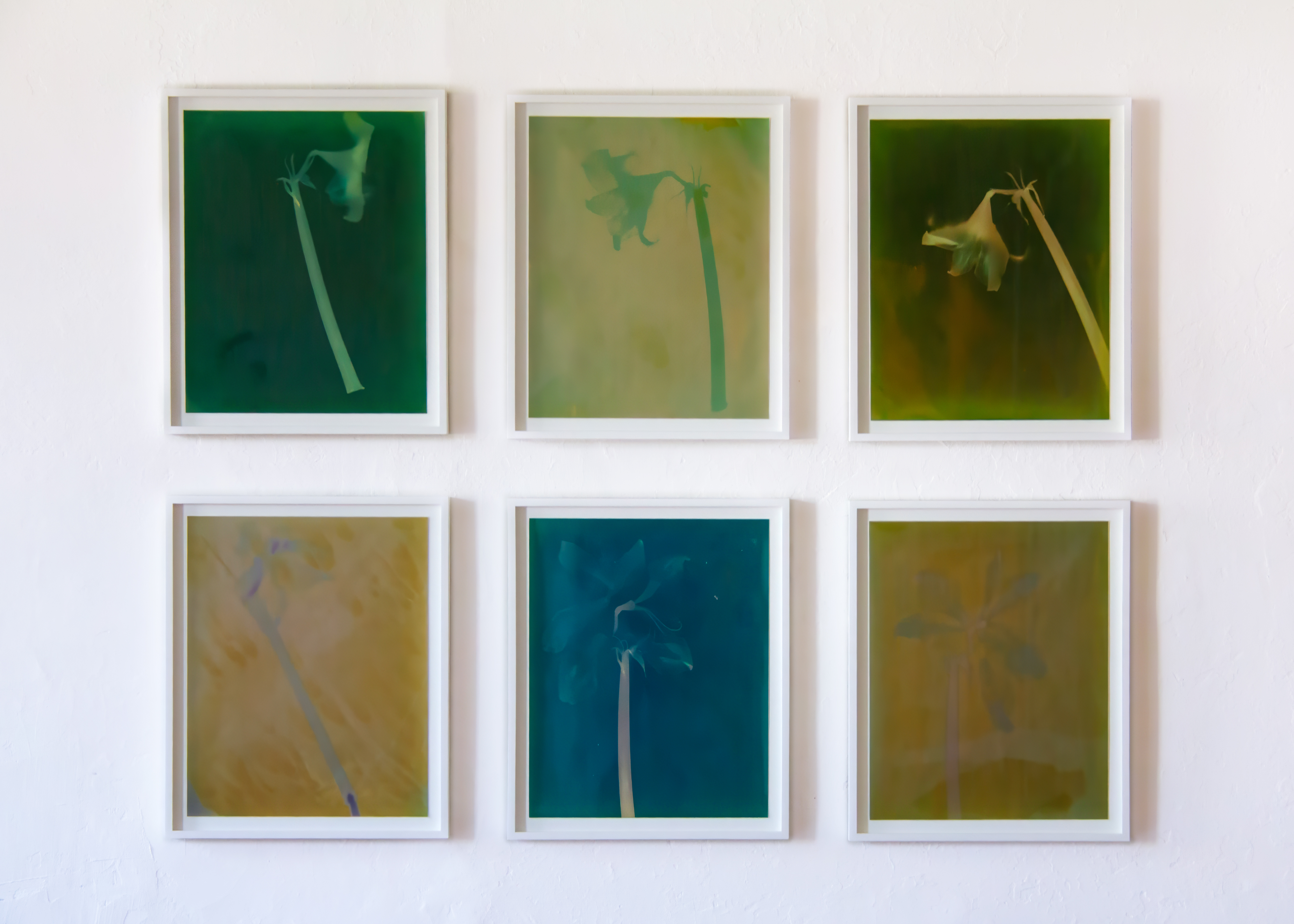
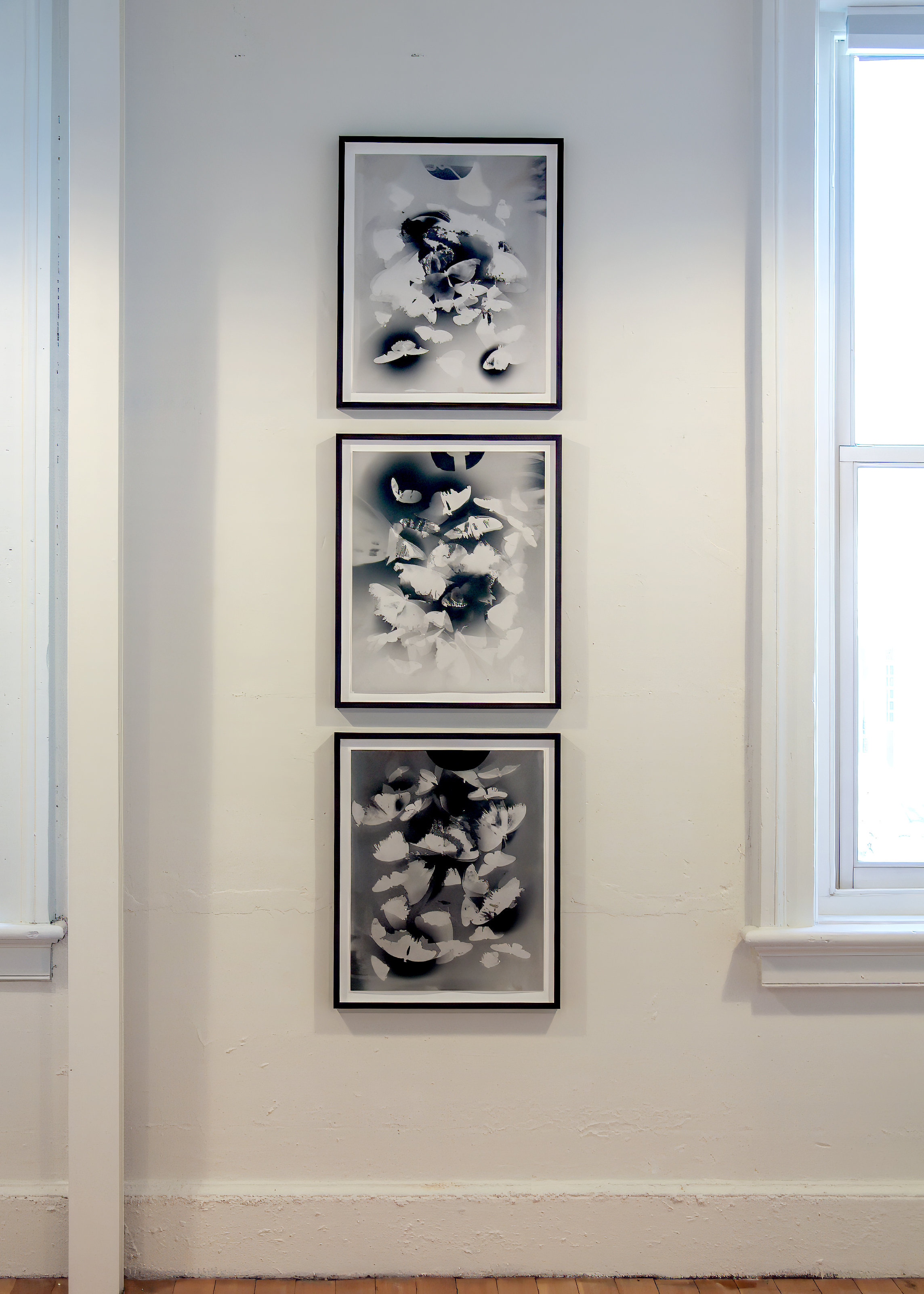
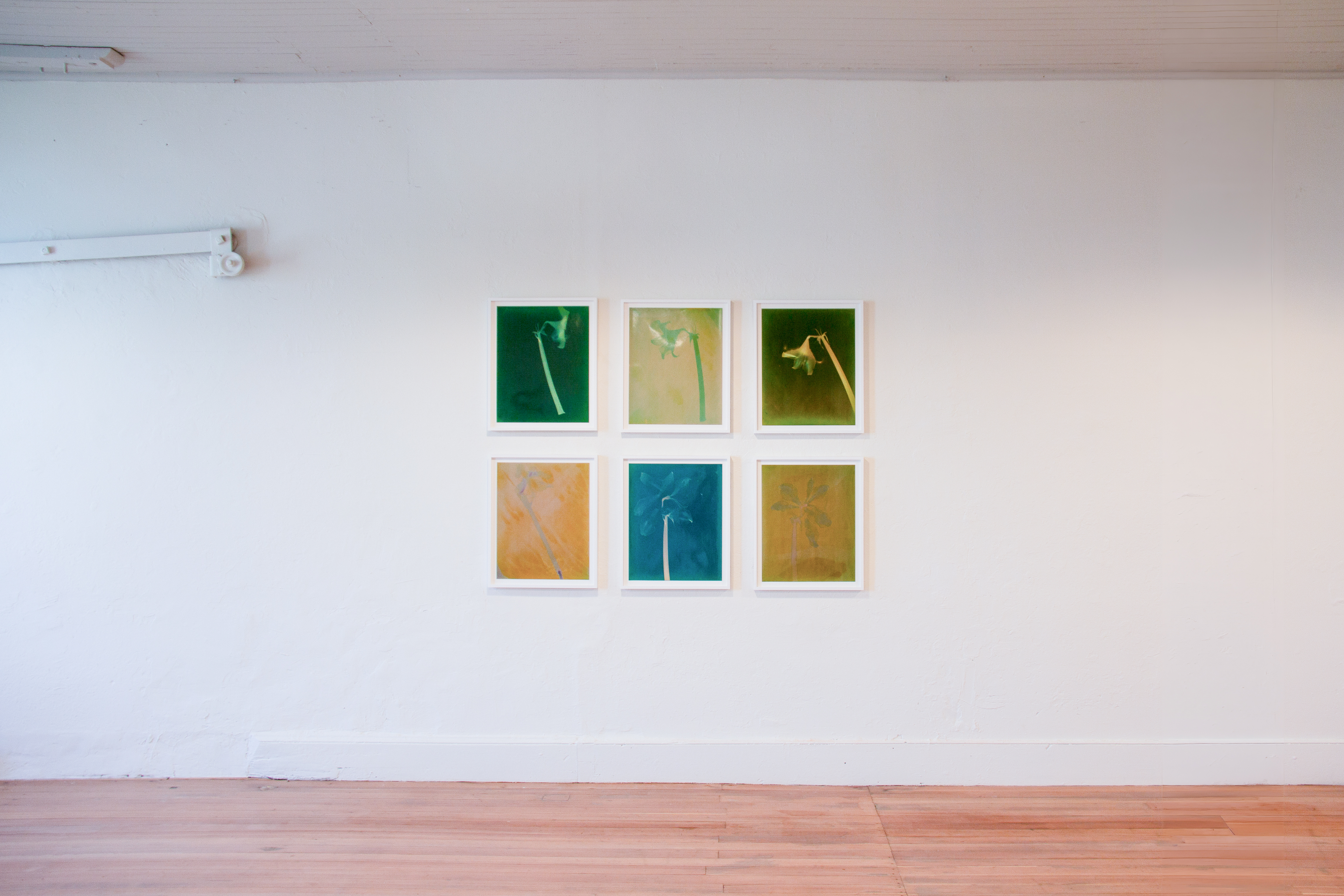
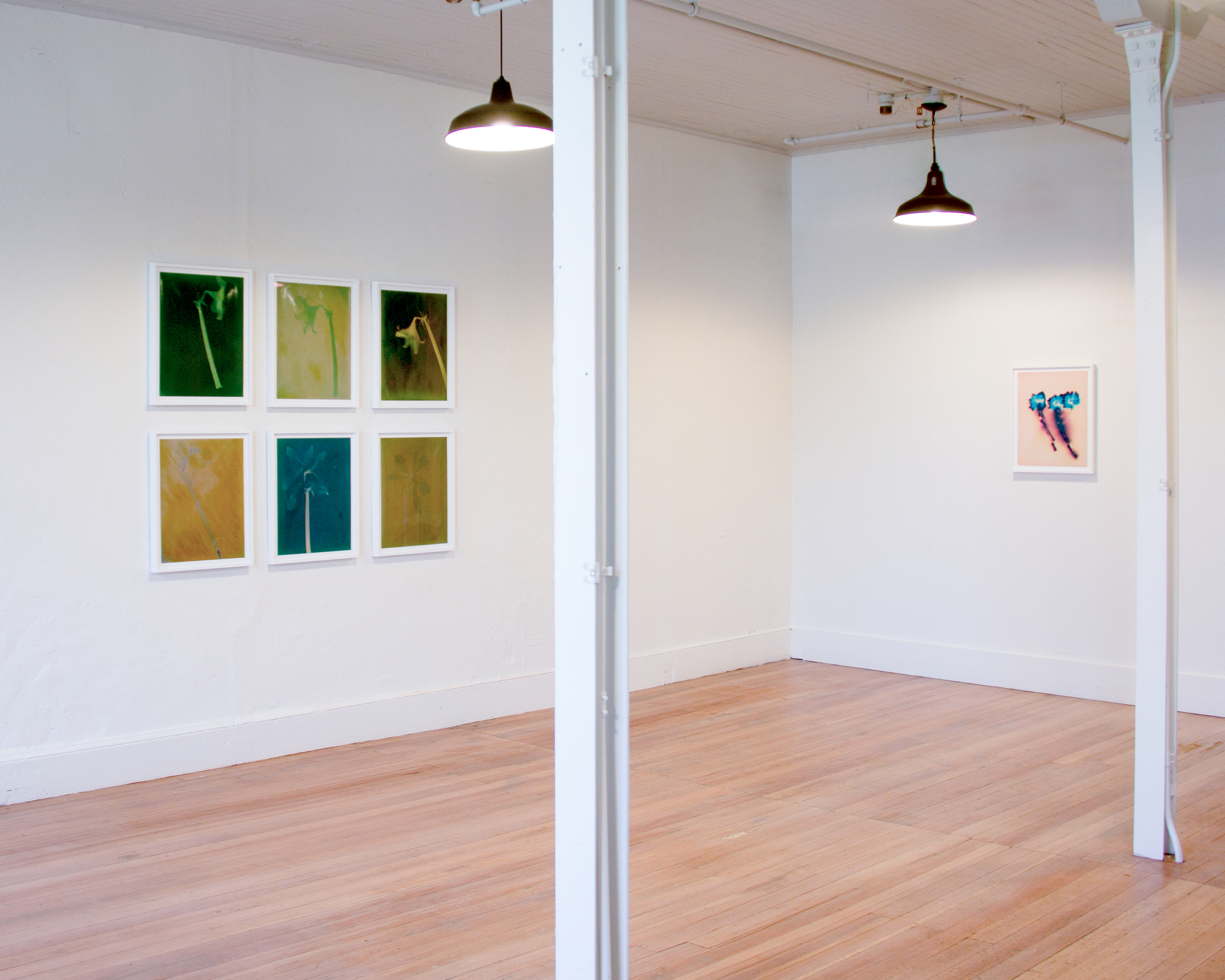
Frazier’s current work is the result of pursuing the subliminal in the darkroom, where form is rendered so lightweight it becomes two-dimensional. This work carries a material and emotional density and permanence previously unavailable to the artist through her past sculptural work, which often focused on lightweight and ephemeral forms. This practice is doubly phenomenological: it is both a recording of everyday phenomena—the ephemerality of icicles, the blooming of an amaryllis, or the sudden breaking of an object—and a direct, alternative engagement with the physics and chemistry that comes with cameraless photography. These subjects are not arbitrary; they are specific markers of time and season, reflecting a rigorous ponderance and culling of her surroundings. Each piece functions as a way of recording an event, capturing a specific moment of contact through a process that bypasses a lens entirely.
Because color work precludes the use of a safelight, Frazier's studio environment is one of total darkness and literal blindness. She relies on her hands and feet, navigating light-sensitive paper, noxious chemistry, and the studio maze of various work surfaces through a tactile intuition that goes beyond sight. The synthesis of these materials—cold, sharp, dangerous, and delicate—becomes a dance where the hand, the object, the paper, the light, and the chemicals meet in an unobservable choreography. This reliance on touch ensures that each work is a unique record of a sensory encounter.
This is where the title for the exhibition, Night Writing, originated. Conceived by Charles Barbier in the early nineteenth century, "night writing" emerged as a tactile, cryptographic lexicon of raised dots and dashes upon dense paper—a method engineered for the silent, lightless transmission of information amidst the total darkness of military maneuvers. This practice necessitated a reliance on touch rather than sight, allowing soldiers to navigate the subliminal space of the battlefield by engaging directly with the material surface, thereby bypassing the vulnerability of a visible light source. Later, Louis Braille encountered Barbier's complex 12-dot military code as a student and simplified it into the far more efficient 6-dot tactile system used today.
The introduction of color into this process has pushed Frazier's work into a deeper engagement with both her technical curiosity and personal neurology. Frazier was born with color-grapheme synesthesia, a condition where sensory pathways overlap, causing certain symbols, letters, or numbers to be involuntarily experienced as specific colors. For her, this means she reacts to the results of her work through a personal lexicon where colors possess specific, non-arbitrary meanings additional to the visually identifiable subject matter. Her work with reactivating expired photographic chemicals and discontinued Kodak papers involves a precise honing of chemistry—tailoring her tools and studio environment toward this internal vocabulary. What is normally a strict process of precision for traditional photographers has, for Frazier, become a matter of riding the line of improvisation within the framework of a technique that allows little room beyond “success” before it simply does not work. This work drives a wedge into the establishment of a medium’s conventions of correctness, and this act of confronting and upending tradition is a thread that she draws through all of her work.
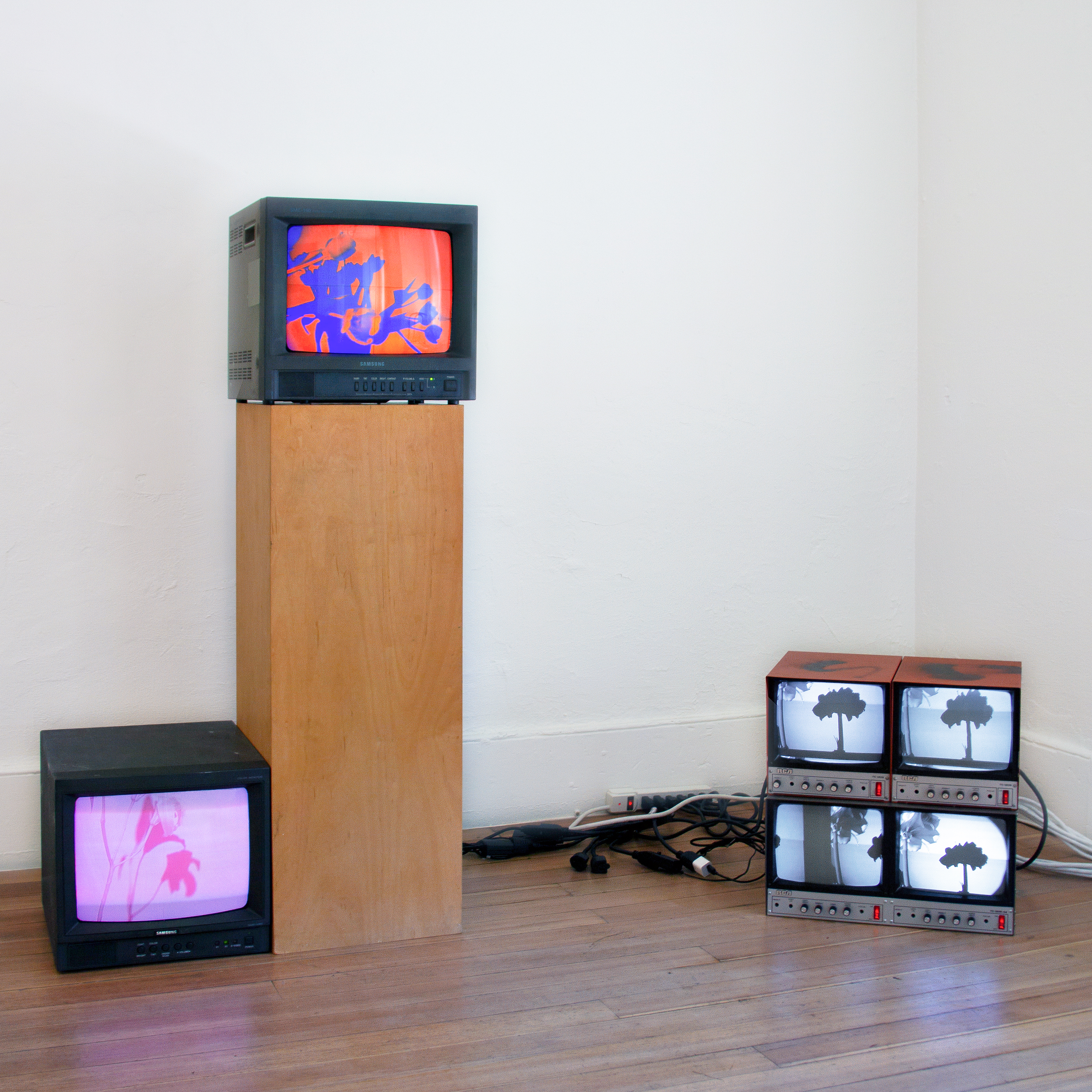
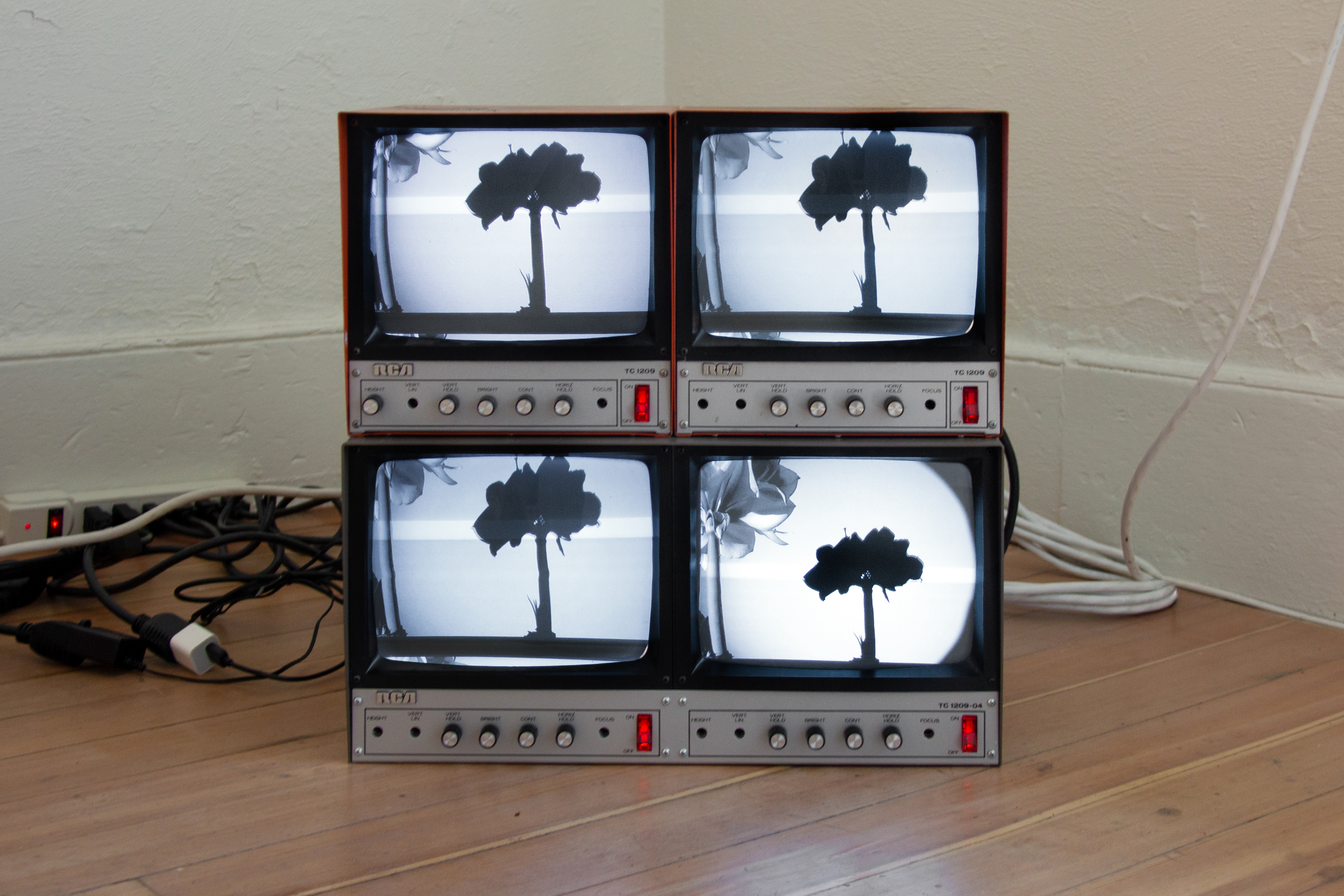
Anchoring the physical space of the gallery is an installation of another reanimated obsolete technology: an AV cart stacked with CRT TV monitors, functioning as much as sculptural objects as they do screens. This intervention draws a deliberate line between two distinct historical precedents: Edward Steichen’s 1936 exhibition of live delphiniums at the Museum of Modern Art—which famously collapsed the boundaries between horticulture, science, and fine art—and the video work of Nam June Paik, who subverted the passive consumption of television into a sculptural medium. By broadcasting six time-lapse videos of the shifting shadows of blooming flowers across these obsolete screens, the installation marries Steichen’s organic spectacle with Paik’s technological irreverence. The footage varies between black-and-white and color, establishing a direct dialogue with the material evolution of her two-dimensional work. More than a mere technical shift, this transition echoes the groundbreaking application of three-strip Technicolor in The Wizard of Oz. Frazier is drawn to the deliberate, radical threshold engineered by director Victor Fleming and cinematographer Harold Rosson, but feels a particular affinity with Natalie Kalmus. As the co-founder of the Technicolor company and the mandatory on-set "color supervisor," Kalmus dictated the color palettes, costumes, and set designs to ensure the chemical dye process of the film strips would register perfectly on screen. She meticulously controlled the physical environment to serve a demanding chemical one.
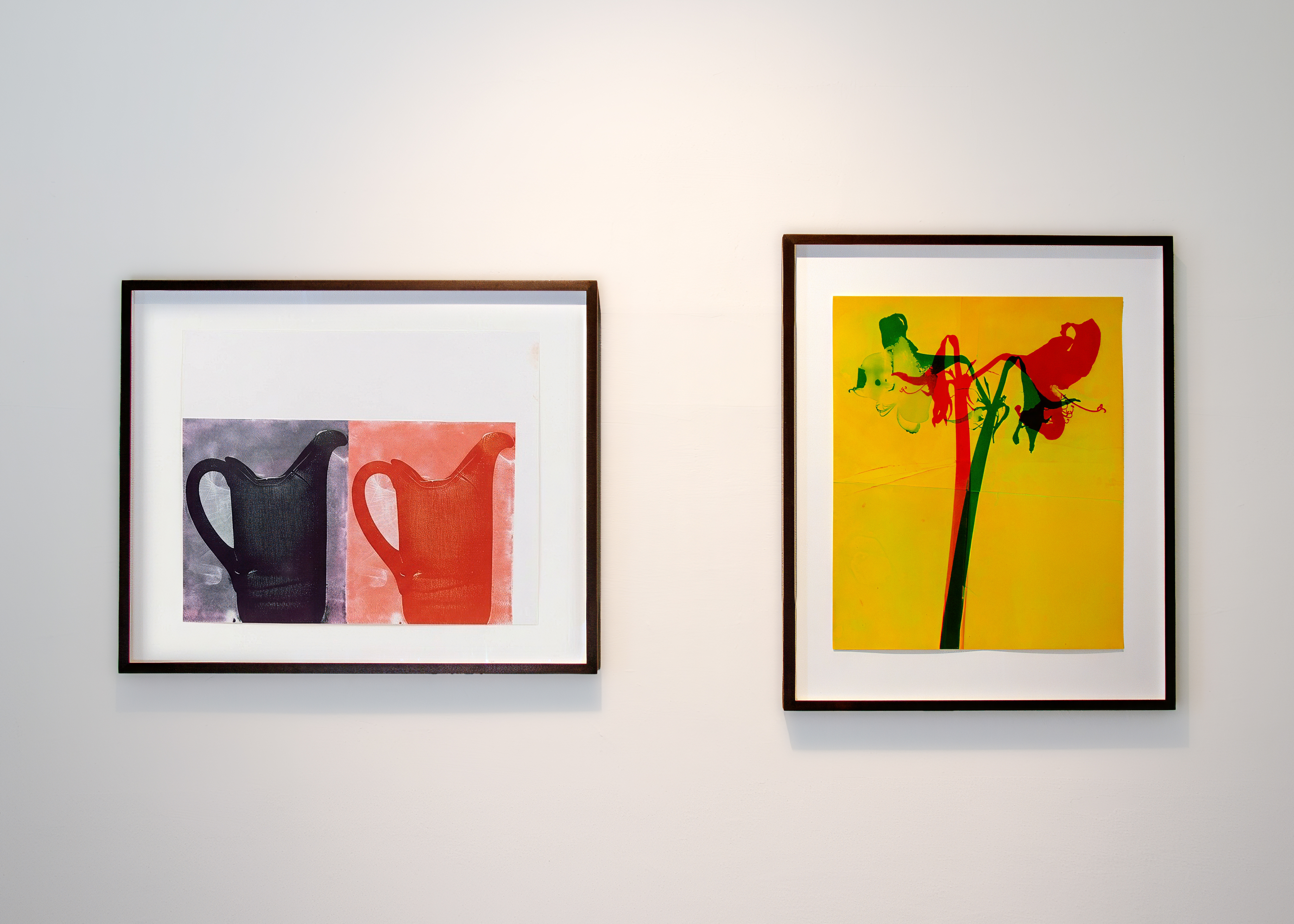
Dorothy waking up in the saturated Land of Oz mirrors Frazier's own awakening to dye transfer printing—a process that shares its historical and technical DNA with Kalmus's cinematic color achievements. Widely considered the apex of photographic complexity, it has been said that there are only about five living practitioners of the process remaining today. The reasons for this near-extinction are purely logistical: it is an agonizingly demanding method involving dozens of meticulous, labor-intensive steps, and the required materials are so exceedingly rare that almost no one attempts it. Because commercial production of these supplies ceased decades ago, Frazier synthesized the chemistry herself from scratch. The process involves physically pressing cyan, magenta, and yellow dyes from a gelatin matrix directly into the paper's emulsion. This method transforms the photographic image into a literal deposit of pigment, allowing an unprecedented, almost painterly control over chromatic intensity. Producing an edition of these prints for this exhibition became the ultimate synthesis of her practice: it is a deeply tactile, sculptural approach to image-making that satisfies her synesthetic drive for hyper-specific saturation, while simultaneously resurrecting an impossibly demanding technique.
"Night Writing" is a reclamation of degraded materials to explore the interval between a material’s intended life and its current state of reanimation. This is also an expression of how artists possess the unique ability to bypass a material’s otherwise hefty paywall. By reactivating these old, found, and discontinued stocks, these photograms function as a super-material record that collapses the distance between time, the three-dimensional source, standards, and the final image. The result is a vibrant, chromatic field that functions as both a scientific specimen and a sensory provocation, translating Frazier's everyday experience of the material world and a private, sequestered studio practice into a public record of fragile life.
Daniele Frazier (b.1985, San Francisco, CA) is an artist, published writer, and educator. She received her BFA from The Cooper Union School of Art in 2007 where she was the recipient of the Jacques and Natasha Gelman Trust Award. Frazier's work has been exhibited widely at institutions and galleries including the Whitney Museum, The Queens Museum, Socrates Sculpture Park, Guild & Greyshkul, Museum 52, Rivington Arms, Ritter Zamet, and Gavin Brown’s Passerby, among others. Frazier has guest lectured at The Cooper Union, The Oxbow School (Napa, CA), Bennington College (Bennington, VT), Fordham University (Queens, NY), the New School, NYU, Cooper Union, and The Metropolitan Museum of Art. She has been an artist in residence at Haystack Mountain School of Craft (Deer Isle, ME), The Penland School of Craft (Bakersville, NC), Socrates Sculpture Park (Queens, NY). Frazier’s work has been covered in numerous publications including ArtForum, The New York Times, T Magazine, The New York Observer, Time Out New York, Vice / The Creators Project, Wired Magazine (Italy), among others. She has performed at the Brooklyn Academy of Music, and co-founded and ran the alternative exhibition space Rear Store Front with Trenton Doyle. Frazier is a photography instructor at The Buxton School (Williamstown, MA), serves on The Cooper Union admissions committee, works annually with the NYC AIDS Memorial, and is a contributing writer for Maharam Stories. Frazier lives and works in Upstate New York.
Frazier’s current work is the result of pursuing the subliminal in the darkroom, where form is rendered so lightweight it becomes two-dimensional. This work carries a material and emotional density and permanence previously unavailable to the artist through her past sculptural work, which often focused on lightweight and ephemeral forms. This practice is doubly phenomenological: it is both a recording of everyday phenomena—the ephemerality of icicles, the blooming of an amaryllis, or the sudden breaking of an object—and a direct, alternative engagement with the physics and chemistry that comes with cameraless photography. These subjects are not arbitrary; they are specific markers of time and season, reflecting a rigorous ponderance and culling of her surroundings. Each piece functions as a way of recording an event, capturing a specific moment of contact through a process that bypasses a lens entirely.
Because color work precludes the use of a safelight, Frazier's studio environment is one of total darkness and literal blindness. She relies on her hands and feet, navigating light-sensitive paper, noxious chemistry, and the studio maze of various work surfaces through a tactile intuition that goes beyond sight. The synthesis of these materials—cold, sharp, dangerous, and delicate—becomes a dance where the hand, the object, the paper, the light, and the chemicals meet in an unobservable choreography. This reliance on touch ensures that each work is a unique record of a sensory encounter.
This is where the title for the exhibition, Night Writing, originated. Conceived by Charles Barbier in the early nineteenth century, "night writing" emerged as a tactile, cryptographic lexicon of raised dots and dashes upon dense paper—a method engineered for the silent, lightless transmission of information amidst the total darkness of military maneuvers. This practice necessitated a reliance on touch rather than sight, allowing soldiers to navigate the subliminal space of the battlefield by engaging directly with the material surface, thereby bypassing the vulnerability of a visible light source. Later, Louis Braille encountered Barbier's complex 12-dot military code as a student and simplified it into the far more efficient 6-dot tactile system used today.
The introduction of color into this process has pushed Frazier's work into a deeper engagement with both her technical curiosity and personal neurology. Frazier was born with color-grapheme synesthesia, a condition where sensory pathways overlap, causing certain symbols, letters, or numbers to be involuntarily experienced as specific colors. For her, this means she reacts to the results of her work through a personal lexicon where colors possess specific, non-arbitrary meanings additional to the visually identifiable subject matter. Her work with reactivating expired photographic chemicals and discontinued Kodak papers involves a precise honing of chemistry—tailoring her tools and studio environment toward this internal vocabulary. What is normally a strict process of precision for traditional photographers has, for Frazier, become a matter of riding the line of improvisation within the framework of a technique that allows little room beyond “success” before it simply does not work. This work drives a wedge into the establishment of a medium’s conventions of correctness, and this act of confronting and upending tradition is a thread that she draws through all of her work.
Anchoring the physical space of the gallery is an installation of another reanimated obsolete technology: an AV cart stacked with CRT TV monitors, functioning as much as sculptural objects as they do screens. This intervention draws a deliberate line between two distinct historical precedents: Edward Steichen’s 1936 exhibition of live delphiniums at the Museum of Modern Art—which famously collapsed the boundaries between horticulture, science, and fine art—and the video work of Nam June Paik, who subverted the passive consumption of television into a sculptural medium. By broadcasting six time-lapse videos of the shifting shadows of blooming flowers across these obsolete screens, the installation marries Steichen’s organic spectacle with Paik’s technological irreverence. The footage varies between black-and-white and color, establishing a direct dialogue with the material evolution of her two-dimensional work. More than a mere technical shift, this transition echoes the groundbreaking application of three-strip Technicolor in The Wizard of Oz. Frazier is drawn to the deliberate, radical threshold engineered by director Victor Fleming and cinematographer Harold Rosson, but feels a particular affinity with Natalie Kalmus. As the co-founder of the Technicolor company and the mandatory on-set "color supervisor," Kalmus dictated the color palettes, costumes, and set designs to ensure the chemical dye process of the film strips would register perfectly on screen. She meticulously controlled the physical environment to serve a demanding chemical one.
Dorothy waking up in the saturated Land of Oz mirrors Frazier's own awakening to dye transfer printing—a process that shares its historical and technical DNA with Kalmus's cinematic color achievements. Widely considered the apex of photographic complexity, it has been said that there are only about five living practitioners of the process remaining today. The reasons for this near-extinction are purely logistical: it is an agonizingly demanding method involving dozens of meticulous, labor-intensive steps, and the required materials are so exceedingly rare that almost no one attempts it. Because commercial production of these supplies ceased decades ago, Frazier synthesized the chemistry herself from scratch. The process involves physically pressing cyan, magenta, and yellow dyes from a gelatin matrix directly into the paper's emulsion. This method transforms the photographic image into a literal deposit of pigment, allowing an unprecedented, almost painterly control over chromatic intensity. Producing an edition of these prints for this exhibition became the ultimate synthesis of her practice: it is a deeply tactile, sculptural approach to image-making that satisfies her synesthetic drive for hyper-specific saturation, while simultaneously resurrecting an impossibly demanding technique.
"Night Writing" is a reclamation of degraded materials to explore the interval between a material’s intended life and its current state of reanimation. This is also an expression of how artists possess the unique ability to bypass a material’s otherwise hefty paywall. By reactivating these old, found, and discontinued stocks, these photograms function as a super-material record that collapses the distance between time, the three-dimensional source, standards, and the final image. The result is a vibrant, chromatic field that functions as both a scientific specimen and a sensory provocation, translating Frazier's everyday experience of the material world and a private, sequestered studio practice into a public record of fragile life.
Daniele Frazier (b.1985, San Francisco, CA) is an artist, published writer, and educator. She received her BFA from The Cooper Union School of Art in 2007 where she was the recipient of the Jacques and Natasha Gelman Trust Award. Frazier's work has been exhibited widely at institutions and galleries including the Whitney Museum, The Queens Museum, Socrates Sculpture Park, Guild & Greyshkul, Museum 52, Rivington Arms, Ritter Zamet, and Gavin Brown’s Passerby, among others. Frazier has guest lectured at The Cooper Union, The Oxbow School (Napa, CA), Bennington College (Bennington, VT), Fordham University (Queens, NY), the New School, NYU, Cooper Union, and The Metropolitan Museum of Art. She has been an artist in residence at Haystack Mountain School of Craft (Deer Isle, ME), The Penland School of Craft (Bakersville, NC), Socrates Sculpture Park (Queens, NY). Frazier’s work has been covered in numerous publications including ArtForum, The New York Times, T Magazine, The New York Observer, Time Out New York, Vice / The Creators Project, Wired Magazine (Italy), among others. She has performed at the Brooklyn Academy of Music, and co-founded and ran the alternative exhibition space Rear Store Front with Trenton Doyle. Frazier is a photography instructor at The Buxton School (Williamstown, MA), serves on The Cooper Union admissions committee, works annually with the NYC AIDS Memorial, and is a contributing writer for Maharam Stories. Frazier lives and works in Upstate New York.
Read More
 1
1
 2
2
 3
3
 4
4
 5
5
 6
6
 7
7
 8
8
 9
9
SEPTEMBER