New Slant Old Story
SEPTEMBER presents Reginald Madison: "New Slant Old Story", marking the gallery’s third solo exhibition with the artist. Before he passed away on May 12th of this year, Madison helped select works that connect to his childhood experiences of Catholic School. New Slant Old Story is the first exhibition centering this subject, which alternately bemused and distressed him. Culling from decades of Madison’s work, we chose paintings on canvas, panel and paper, the majority of which have never been exhibited.
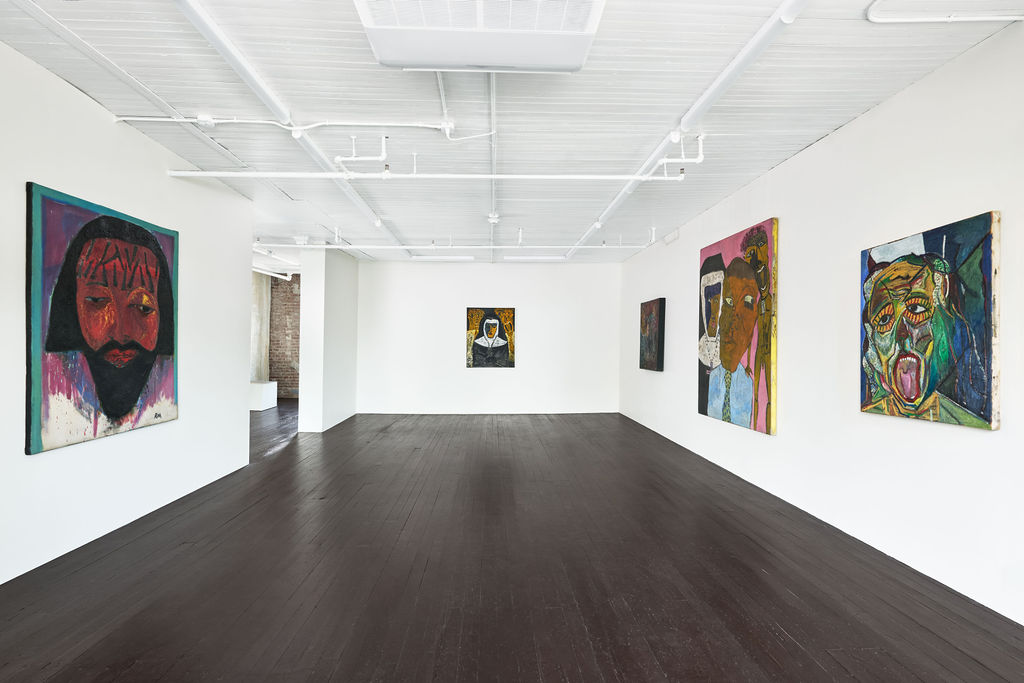
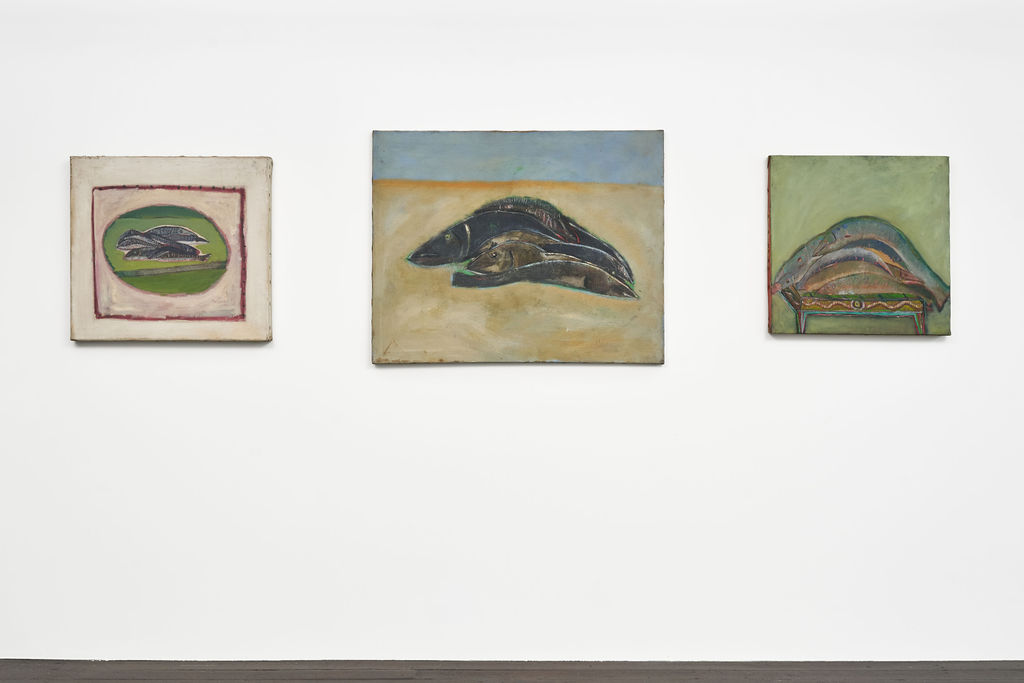
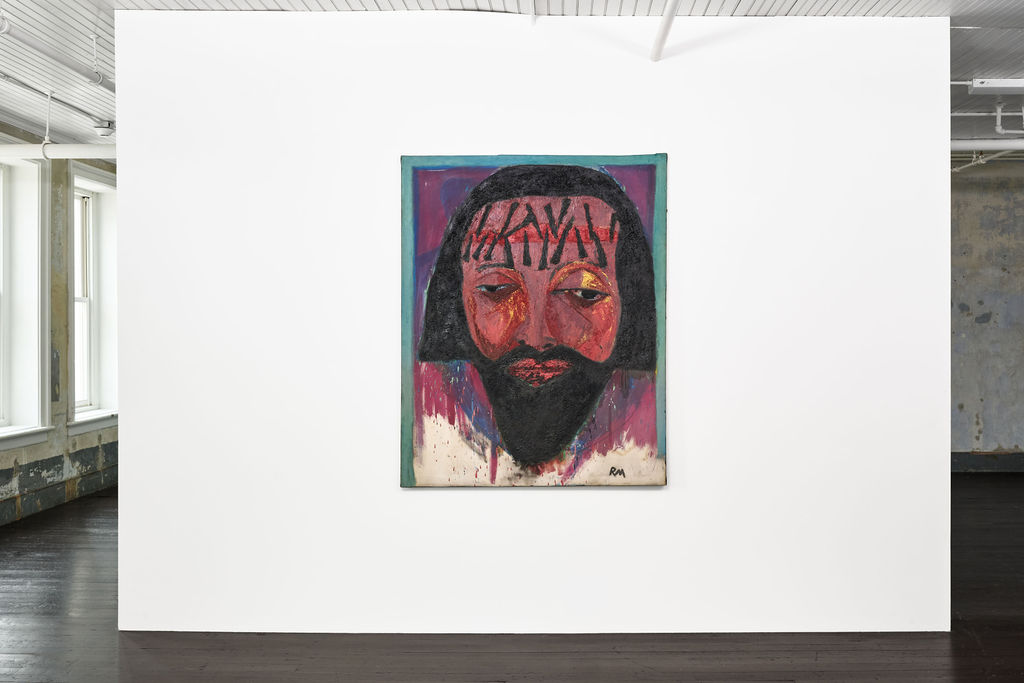
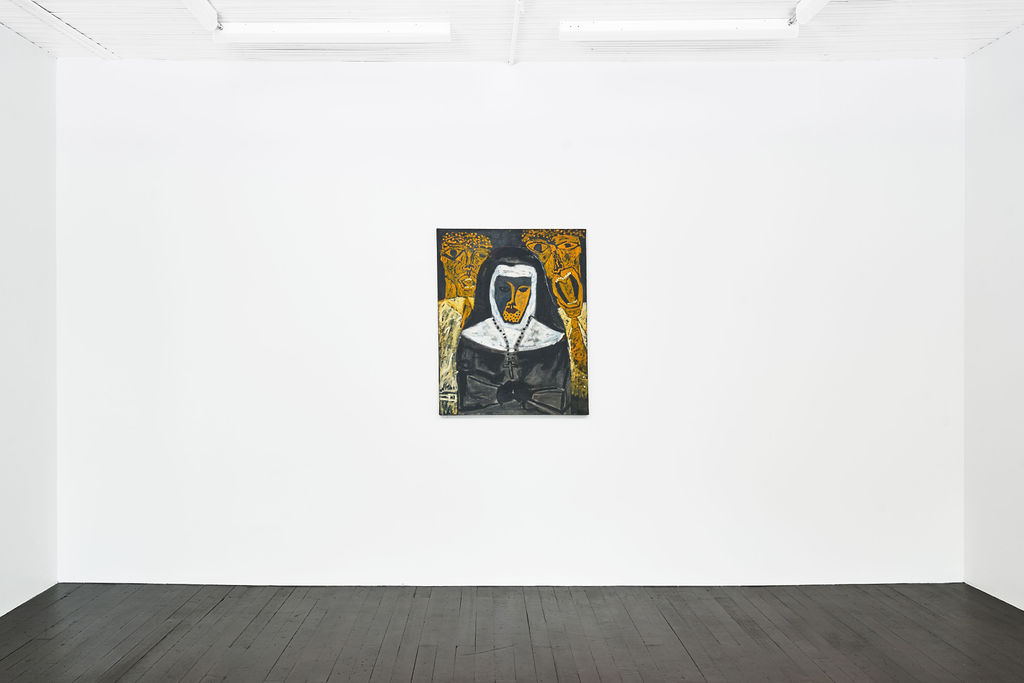
From innocuous fish Friday dinners to nefarious nuns, the works range in emotional tenor. The institution of Catholic School brought Madison both structure and exploitation, regularity and unpredictability. Over the course of his life, imagery from this time found its way into his work. Religious symbology- crosses, nuns, devils and Jesus- became part of his vocabulary in the same ambiguous way other subjects persisted for him. The iconography is unmistakable and bold, yet the resulting compositions evade reductive meaning.
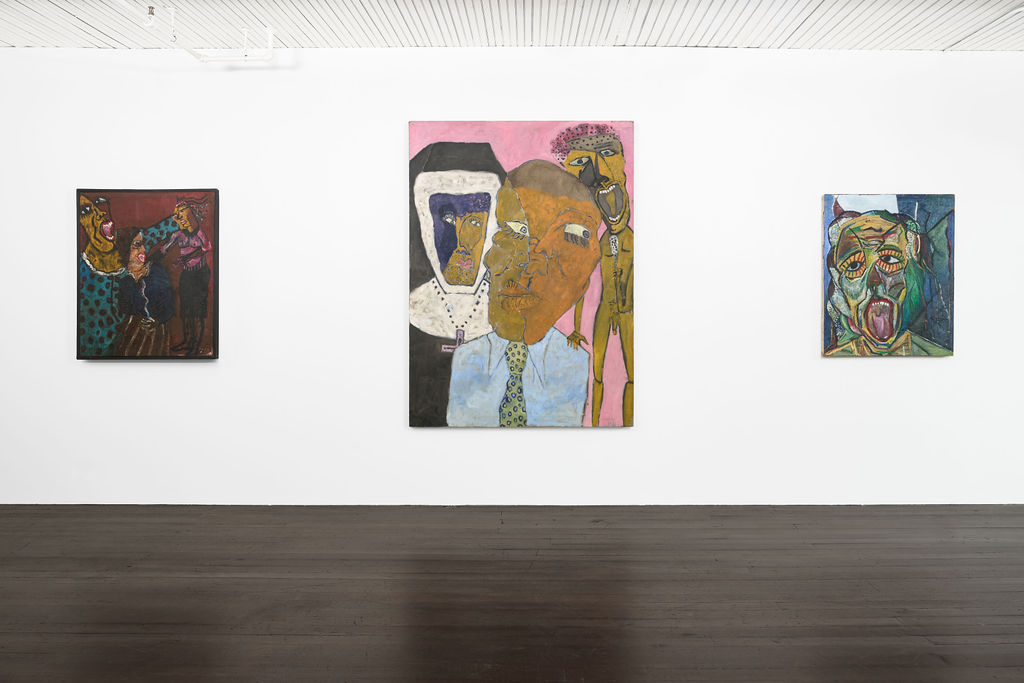
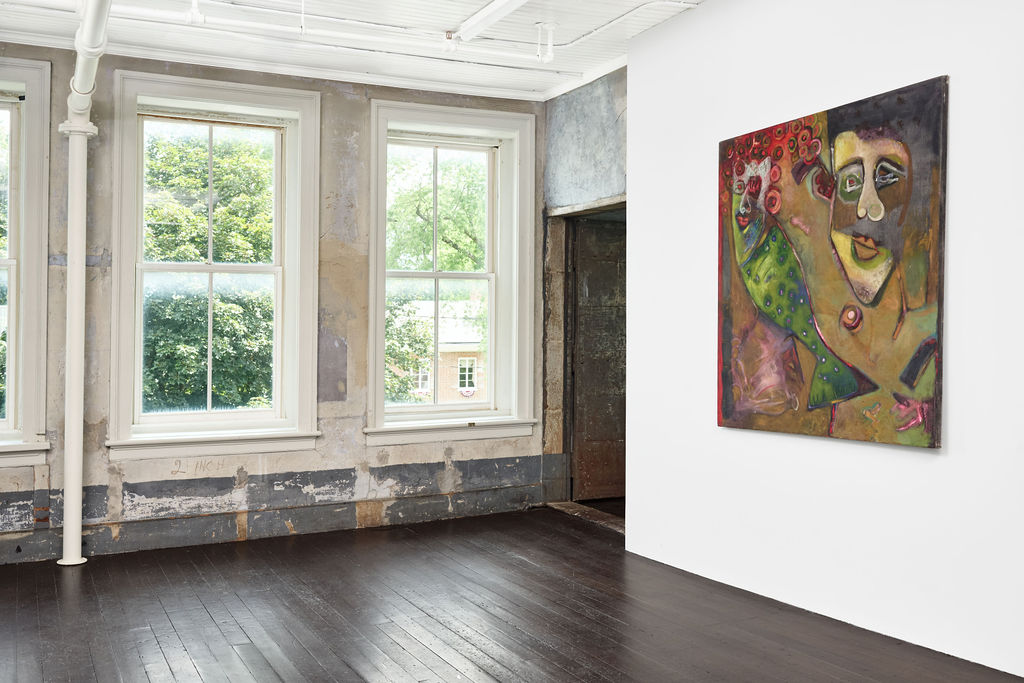
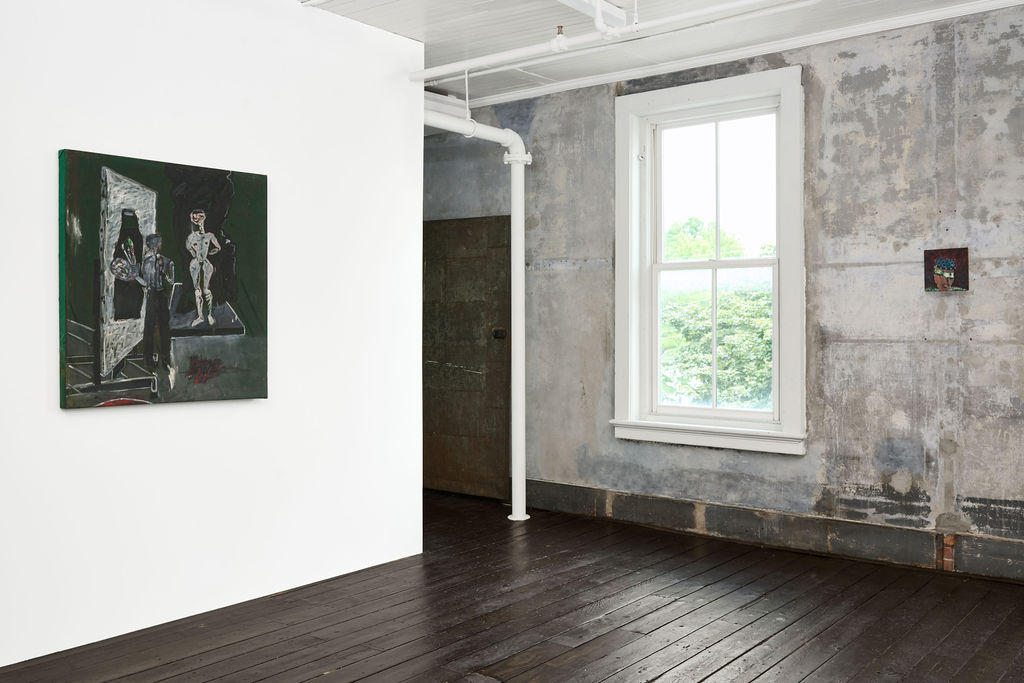
Unsettling faces with burrowing gazes and stretched open mouths repeat. Figures cluster closely together seemingly confined by the literal edges of the canvas. Their congestion evokes claustrophobia or perhaps alternate versions of the same psyche. There are several dual (and dueling) personalities that mirror each other, often framing a central larger subject.
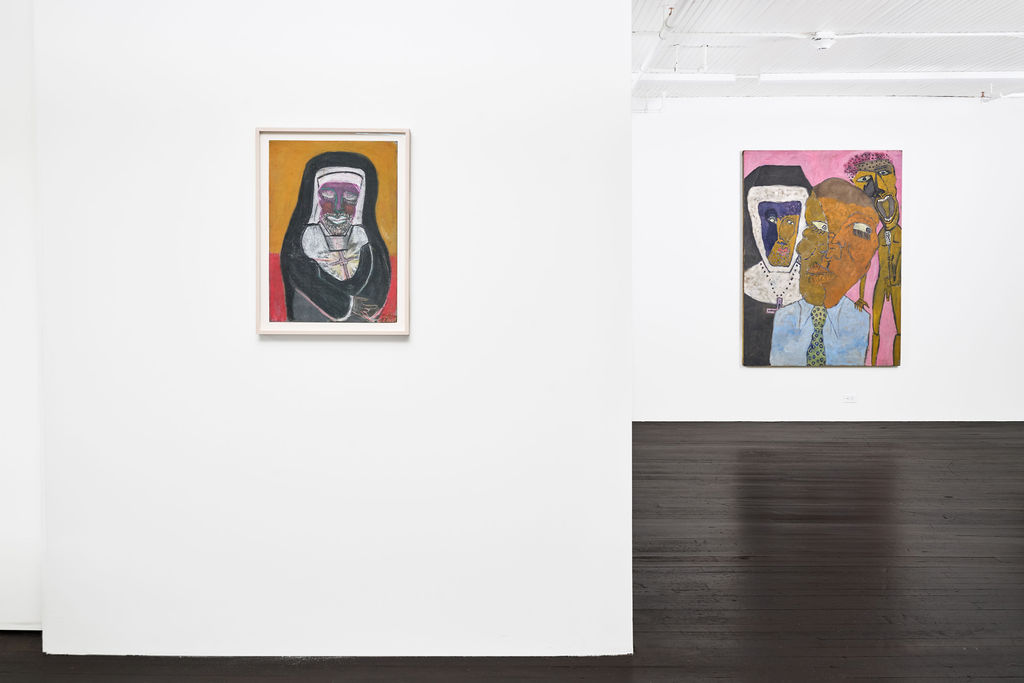
A cross, a necktie, a phallus and microphone are the descriptors of three figures in Madison’s largest work in the show, New Slant Old Story. A nun is apparently wearing lipstick, a young man is possibly dressed in school uniform, and an exposed man appears to be shouting emphatically. The nun and middle figure are both formally dressed, and their faces share similar scale, palette and dimensionality. To their left (our right) is a thin, naked, full bodied man occupying a slim portion of the composition, but holding nothing back. His wide-mouthed shout contrasts his diminutive, gently-resting hand perched supportively on the young man’s shoulder.
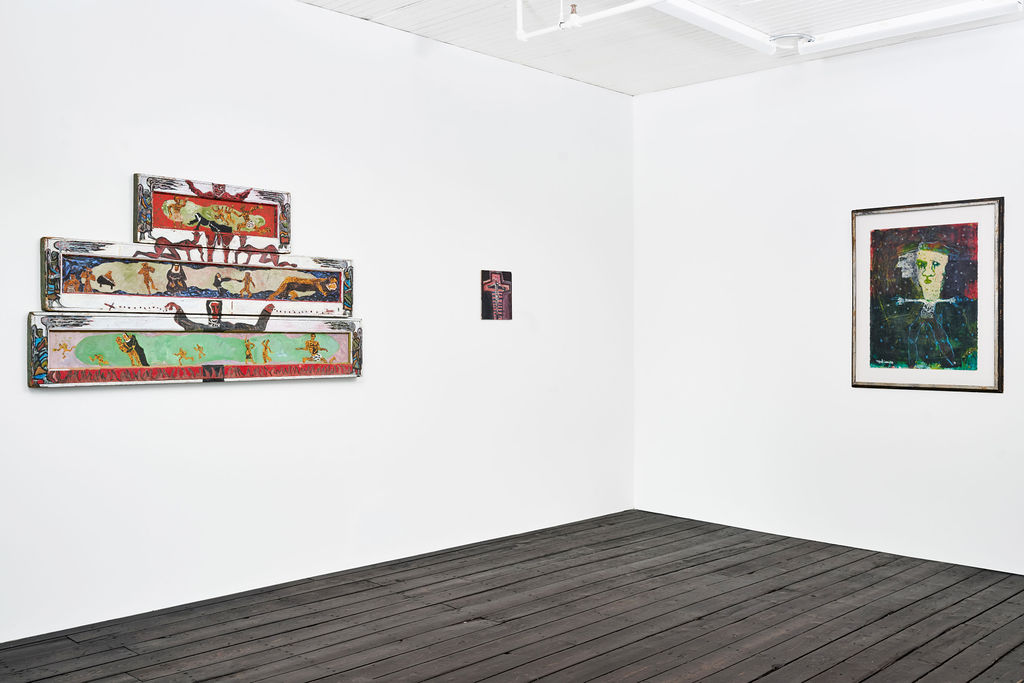
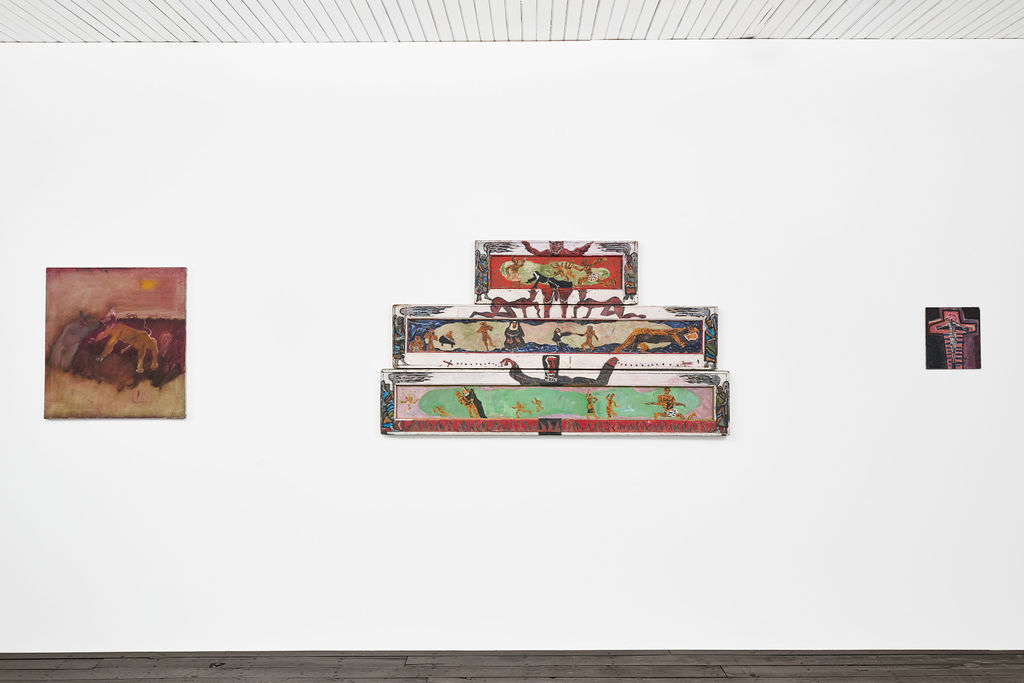
The three-part work on salvaged architectural panels, The Dance Lesson, depicts an unusually narrative and symmetrical composition. In it there are two uncharacteristically tiny figures of a habited nun and unclothed male in varying states of action: dancing, running, chasing, escaping, falling, embracing. Their story is split by an outsized frightening nun with arms flung open, tossing rosary beads with abandon, or casting some kind of spell. Crowning the triptych is a trio of devils, one demonically grinning and two subserviently crawling. All are flanked by winged angels with vacant expressions reminiscent of grave stone carvings. One of their skeletal faces recalls Munch’s The Scream. A number of faces in the show are similarly arrested.
The works in the exhibition are predominantly unsettling, though they are also mesmerizing. We can’t look away. And apparently Madison, who held many interests and explored numerous subjects, couldn’t either. New Slant Old Story offers a window into the complexity of a man who processed living through the physical and intuitive act of painting. Madison maintained that he wasn't narrating stories, that his work took him where it wanted to go. And it's evident that some subjects had a hold on him.
Born in the South Side of Chicago in 1941, Reginald Madison emerged from the Black Arts Movement (1965–1975) as a self-taught artist whose path was defined by determination and an unwavering commitment to his practice. As a teenager, he discovered a discarded box of paints, an encounter that would spark a lifelong devotion to artmaking. From a young age, he was surrounded by musicians, becoming deeply inspired by improvisational jazz which fueled his instinctive approach in the studio. He later worked at U.S. Steel South Works, taking on extra shifts to support his young family and to fund a formative year of travel in Europe, where he visited museums and galleries in Paris, Munich, and Madrid.
In 1968, Madison had his first public presentation at Art & Soul in Chicago, where he was awarded third place in a competition juried by artist Richard Hunt and curator Jan van der Marck, founding director of the Museum of Contemporary Art Chicago. This early recognition affirmed his artistic direction and led him to continue his practice across New York City and Western Massachusetts, before ultimately settling in Hudson, New York, where he lived and worked until his passing in 2026.
Madison was passionately versed in art history and was especially influenced by artists Fernand Leger, Stuart Davis, Jacob Lawrence, as well as artists he knew personally including Thornton Dial and the trickster David Hammons. Musicians who pioneered new approaches to sound equally inspired him, including Ornette Coleman, John Coltrane, Dizzy Gillespie, Charlie Parker and especially the notorious Sun Ra.
Madison approached his paintings and sculptures alike with a studied sense of form mixed with the restless spontaneity of a rebellious spirit. Working in both figuration and abstraction, he developed a distinctive palette of earthy, matte tones, as Madison famously abhorred sheen. He achieved highly-textured canvases and panels with an array of tools and materials, from tar to sponges to brushes, with colors often mixed directly on the studio walls. His sculptures were constructed of salvaged wood parts that he composed into formidable forms and figures that towered in his studio. These were his orchestral talismans.
Madison was represented by Phyllis Kind Gallery in New York City from 1975-2009. SEPTEMBER Gallery began representing him in 2021, followed by Uffner & Liu in 2024. Madison’s work has twice been reviewed in the New York Times (1992, 2024) and is in prominent collections including: The Baltimore Museum of Art, Beth Rudin DeWoody Collection, The Bronx Museum of the Arts, University of Santa Barbara Art, Design & Architecture Museum, and Museum of Fine Arts St. Petersburg. His work has been featured in historic exhibitions including, “Art for People’s Sake: Artists and Community in Black Chicago, 1965-1975”, Duke University Press, and “The Time Is Now! Art Worlds of Chicago’s South Side, 1960-1980”, The University of Chicago Press. In 2021, Madison was the recipient of a National Endowment for the Arts grant.
From innocuous fish Friday dinners to nefarious nuns, the works range in emotional tenor. The institution of Catholic School brought Madison both structure and exploitation, regularity and unpredictability. Over the course of his life, imagery from this time found its way into his work. Religious symbology- crosses, nuns, devils and Jesus- became part of his vocabulary in the same ambiguous way other subjects persisted for him. The iconography is unmistakable and bold, yet the resulting compositions evade reductive meaning.
Unsettling faces with burrowing gazes and stretched open mouths repeat. Figures cluster closely together seemingly confined by the literal edges of the canvas. Their congestion evokes claustrophobia or perhaps alternate versions of the same psyche. There are several dual (and dueling) personalities that mirror each other, often framing a central larger subject.
A cross, a necktie, a phallus and microphone are the descriptors of three figures in Madison’s largest work in the show, New Slant Old Story. A nun is apparently wearing lipstick, a young man is possibly dressed in school uniform, and an exposed man appears to be shouting emphatically. The nun and middle figure are both formally dressed, and their faces share similar scale, palette and dimensionality. To their left (our right) is a thin, naked, full bodied man occupying a slim portion of the composition, but holding nothing back. His wide-mouthed shout contrasts his diminutive, gently-resting hand perched supportively on the young man’s shoulder.
The three-part work on salvaged architectural panels, The Dance Lesson, depicts an unusually narrative and symmetrical composition. In it there are two uncharacteristically tiny figures of a habited nun and unclothed male in varying states of action: dancing, running, chasing, escaping, falling, embracing. Their story is split by an outsized frightening nun with arms flung open, tossing rosary beads with abandon, or casting some kind of spell. Crowning the triptych is a trio of devils, one demonically grinning and two subserviently crawling. All are flanked by winged angels with vacant expressions reminiscent of grave stone carvings. One of their skeletal faces recalls Munch’s The Scream. A number of faces in the show are similarly arrested.
The works in the exhibition are predominantly unsettling, though they are also mesmerizing. We can’t look away. And apparently Madison, who held many interests and explored numerous subjects, couldn’t either. New Slant Old Story offers a window into the complexity of a man who processed living through the physical and intuitive act of painting. Madison maintained that he wasn't narrating stories, that his work took him where it wanted to go. And it's evident that some subjects had a hold on him.
Born in the South Side of Chicago in 1941, Reginald Madison emerged from the Black Arts Movement (1965–1975) as a self-taught artist whose path was defined by determination and an unwavering commitment to his practice. As a teenager, he discovered a discarded box of paints, an encounter that would spark a lifelong devotion to artmaking. From a young age, he was surrounded by musicians, becoming deeply inspired by improvisational jazz which fueled his instinctive approach in the studio. He later worked at U.S. Steel South Works, taking on extra shifts to support his young family and to fund a formative year of travel in Europe, where he visited museums and galleries in Paris, Munich, and Madrid.
In 1968, Madison had his first public presentation at Art & Soul in Chicago, where he was awarded third place in a competition juried by artist Richard Hunt and curator Jan van der Marck, founding director of the Museum of Contemporary Art Chicago. This early recognition affirmed his artistic direction and led him to continue his practice across New York City and Western Massachusetts, before ultimately settling in Hudson, New York, where he lived and worked until his passing in 2026.
Madison was passionately versed in art history and was especially influenced by artists Fernand Leger, Stuart Davis, Jacob Lawrence, as well as artists he knew personally including Thornton Dial and the trickster David Hammons. Musicians who pioneered new approaches to sound equally inspired him, including Ornette Coleman, John Coltrane, Dizzy Gillespie, Charlie Parker and especially the notorious Sun Ra.
Madison approached his paintings and sculptures alike with a studied sense of form mixed with the restless spontaneity of a rebellious spirit. Working in both figuration and abstraction, he developed a distinctive palette of earthy, matte tones, as Madison famously abhorred sheen. He achieved highly-textured canvases and panels with an array of tools and materials, from tar to sponges to brushes, with colors often mixed directly on the studio walls. His sculptures were constructed of salvaged wood parts that he composed into formidable forms and figures that towered in his studio. These were his orchestral talismans.
Madison was represented by Phyllis Kind Gallery in New York City from 1975-2009. SEPTEMBER Gallery began representing him in 2021, followed by Uffner & Liu in 2024. Madison’s work has twice been reviewed in the New York Times (1992, 2024) and is in prominent collections including: The Baltimore Museum of Art, Beth Rudin DeWoody Collection, The Bronx Museum of the Arts, University of Santa Barbara Art, Design & Architecture Museum, and Museum of Fine Arts St. Petersburg. His work has been featured in historic exhibitions including, “Art for People’s Sake: Artists and Community in Black Chicago, 1965-1975”, Duke University Press, and “The Time Is Now! Art Worlds of Chicago’s South Side, 1960-1980”, The University of Chicago Press. In 2021, Madison was the recipient of a National Endowment for the Arts grant.
Read More
 1
1
 2
2
 3
3
 4
4
 5
5
 6
6
 7
7
 8
8
 9
9
 10
10
SEPTEMBER